
Hill
s rig is heavy with fixtures from the Ambersphere Solutions
family of brands with Clay
Paky and Ayrton units making up over half of the total desig
n and with a grandMA2 Light
FoH. Explaining the reasons for his choices, Hill begins
with the Ayrton MagicBlades-R
:
This
was my first design with MagicBlades. I
d seen them used a few times before but had been
waiting for the right chance to use them. They have a lot of
features and capabilities which
are great but I
ve seen them overused in a way that I
m not necessarily into. I wanted a
fixture that framed the stage well
geometrically.
The band are so energetic live I wanted to
frame and draw attention to this and thought the MagicBlades w
ould be an ideal choice.
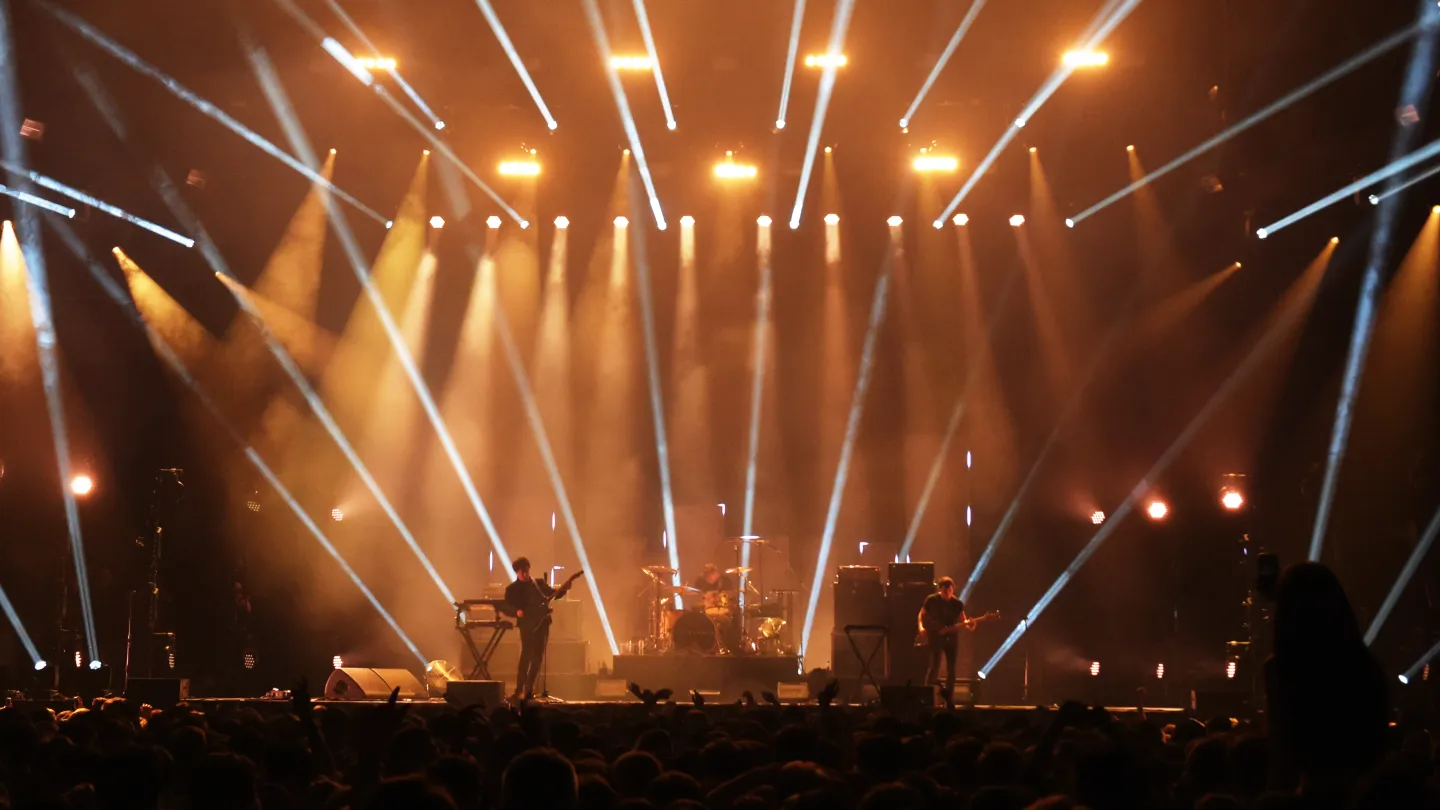
Using the MagicBlades in the side
wall
position was great. It provided a sculptural sidelight
but I could also use the linear effects and individual pixel
control to create more dynamic
emphasis to songs. I think it gave the stage and concept qui
te a
Bladerunner
feel, which I
was into!
An often repeated reason for choosing Clay Paky Stormys is t
hat they are an LED fixture
that, due to its design and reflector, behaves like a traditional
strobe. Hill is happy to add
his name to that list:
I don
t like to see a cheap looking block of LED strobes; the Sto
rmy
gives me the RGBW colour changing capability of an LED fixtu
re but it looks and acts like a
real strobe. Add to that, I use them to back light the band
. It works brilliantly and with a
good colour spectrum from pastels to primary colours. Alth
ough I wouldn
t spec them as a
pure washlight
–
they are after all, a strobe first and foremost - they were vi
brant and
punchy and created some great silhouette and shadow work on
stage, ticking my boxes
perfectly.
The Clay Paky Sharpy remains the
go to
beam light for me,
continues Hill.
There were
over thirty on this rig. If I want a solid beam, a stron
g gobo selection, speed and reliability, I
can go anywhere in the world and find a bunch of Sharpys th
at can do the job and do it
exactly as I want. They are simply my first and only choice.
All my fixture selections are
integral to my final design and on the few occasions when w
e had to go without certain
lights I had to seriously revaluate how the show was run t
o compensate for the negative
differences.
As for control, Hill takes a fairly prosaic approach,
An LD or operator can often be judged
on what desk they choose to use, which I don
t really subscribe to; at the end of the day,
they
re a tool to make lights work and a stage look good. However,
after trying out and
using most of the other leading console options, the grand
MA2 just works best for me.
Programming my own shows, this is important as it needs to
be intuitive and I want to be
thinking about how the show looks - not with my head ti
ed up in console queries. The cue
stacking and editing is powerful and the live control side
of the console works really well.
Once set up, the intelligent elements within the grandMA2 mean p
rogramming is quick,
intuitive and the flow between ideas and how it works onst
age happens without too much
brain strain!"
Hill is already looking forward to his next projects, w
hich will include a range of both Ayrton
and Clay Paky fixtures run, naturally, by his console of
choice, the grandMA2.
These
fixtures are now firmly on my
tried and tested
list and I
m confident they will work really
well with my upcoming projects. As for the Wombats, the
y are now firmly embedded in the
design."