
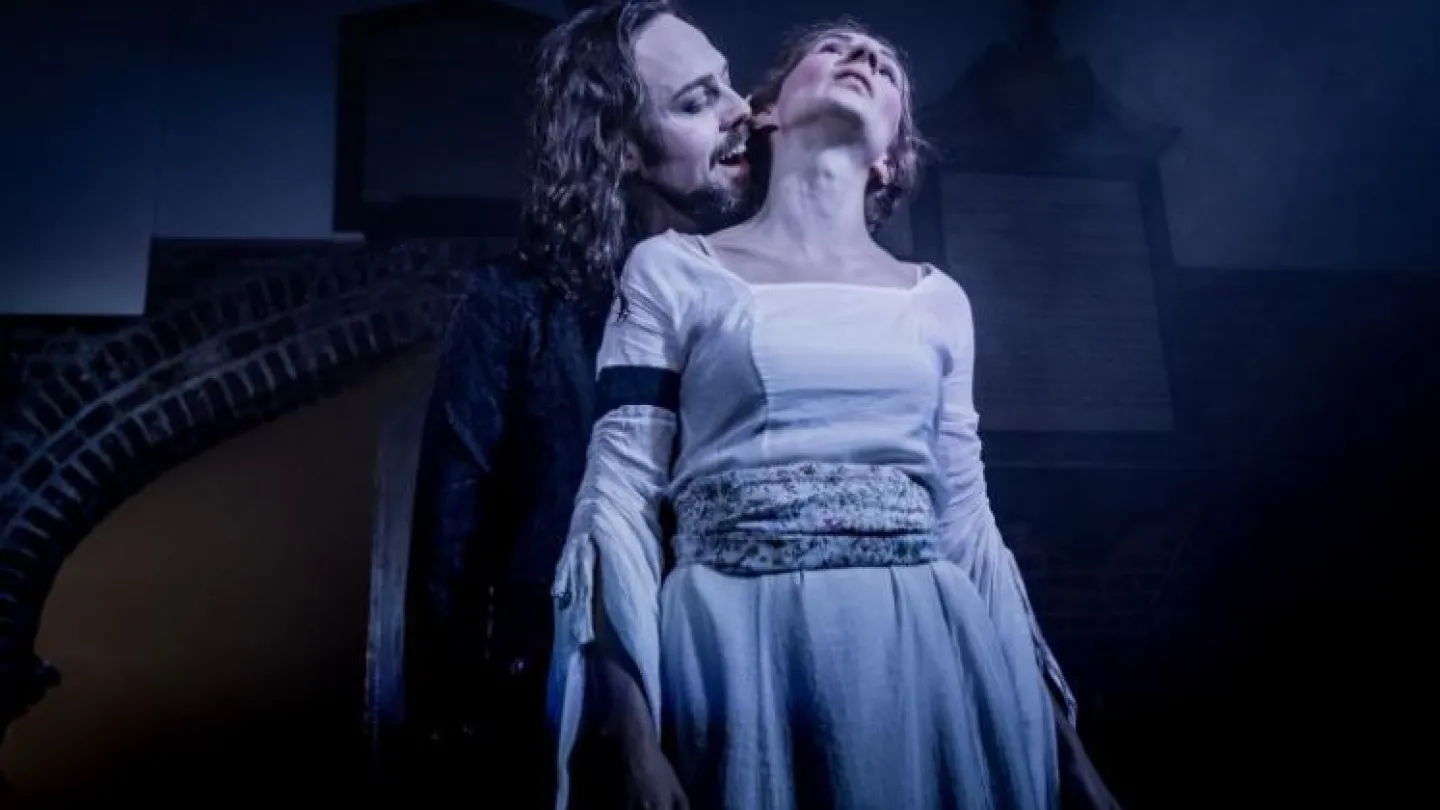
White Light has supplied the lighting equipment for Der Vampyr which was performed on site at The Old Church in Stoke Newington.
Der Vampyr is the first production for the newly formed Gothic Opera; a company that curates mysterious performances of rarely-seen operas in uncanny, atmospheric spaces. The story was first composed in 1828 by Heinrich Marschner at the height of the Gothic craze. The lighting designer for this inaugural production was Will Alder who comments: “Der Vampyr is a Gothic Opera that starts off as you would expect a traditional opera to, before slowly descending into this wonderful farce. It’s a great piece, with music that you leave humming away to yourself. The imagination that this company have in doing this production at Halloween in some ‘spooky’ locations was what really attracted me to the show initially”.
As part of his role, Will worked closely with Director Julia Mintzer to discuss the aesthetic and feel of the show. He explains: “We were all keen on using a lot of haze, and playing with the architecture of The Old Church. I’m a big believer that when you’re in a space that is architecturally interesting and that feeds into the piece you are staging, you should never shy away from using that environment as part of your lighting design. The team had chosen this venue for its look and the way it ties into a Vampire opera at Halloween – the last thing we wanted was for the audience not to be able to see it!
He continues: “We were keen on big bold colours and using red to uplight in the box pews with clouds of fog to help the ‘demons’ arrive from hell itself. The production was on a small budget, meaning the set was minimal, and lighting became even more crucial to create the feel and look that we were craving for the piece”.
Working with both his budgetary and lighting requirements, he reached out to the WL Hires Team to see what could be achieved. He comments: “I was very keen to use two wash movers and two profile movers so that I could have the flexibility of tight pools of light in particular places on the set, and break-up gobos and rotating patterns to create visual interest. The WL Account Handler Chloe Hardwick suggested a few units that we could use, and I took her advice, having done some research into them to make sure they’d suit my needs”.
Will also had to ensure that the footprint of any equipment on the ground was minimal in order to not take out the audience seats. He explains: “I decided to use boom bases up against each of the pillars to make sure the audience could pass underneath and the lighting and projection for surtitles were safely overhead. Cable runs were also exceptionally fun, as you either had to use lots of gaffer to keep a neat run on the ground or put them in full view overhead – I decided that floor runs were the way to go”.
As the show was taking place in a non-traditional theatre space, this obviously meant there were certain barriers that Will had to overcome: the main one being power. He comments: “We had to run everything off 13amps, and there simply wasn’t the budget for an entirely LED rig. I drew from my own stock of lanterns for our generic rig, which brought the total count up to 18 units, and then proportionally patched each generic lantern so that we couldn’t possibly draw too much and blow the system! The Old Church’s technical specifications didn’t list any amount of large mains power available, or where each ring main began and ended, so the job was a constant balancing act to ensure that the total power being drawn across the whole building couldn’t be more than 32amps. This meant a total ban on any phones being charged, kettle’s being boiled and heaters being plugged in – I don’t think I made friends in the company for that rule but we got through the shows safely!”.
The show was performed over the Halloween period and finished its run on November 3rd. Will comments: “This production was an all-round feat of determination. This small team worked incredibly hard to achieve something incredible which ended with an Offie nomination, and it’s a real testament to how hard we worked to achieve something so good with a limited schedule and budget. I’d also like to thank the brilliant team at WL for supporting lighting designers such as myself and helping me achieve the exact design this show needed; both in terms of budgetary and technical requirements”.